
|
|
|
|
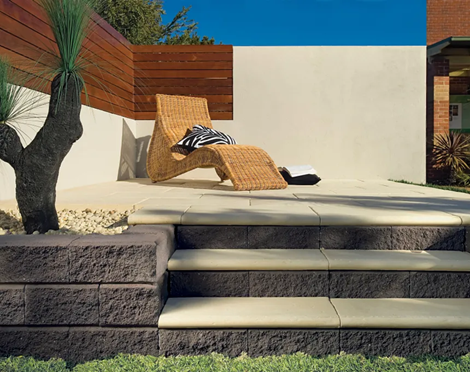
Guide To Choosing Between Smooth And Split Face Retaining Wall BlocksRetaining walls provide essential support for sloped sites, create garden terraces, and define outdoor spaces while enhancing your property’s overall appearance. As such, the type of retaining wall blocks you choose can greatly influence your walls’ look and durability. That’s why understanding the differences between smooth and split face blocks helps you make an informed decision that suits your landscape and design goals. Smooth vs Split Face Blocks Smooth blocks have a uniform, flat surface that gives a sleek, contemporary appearance. They’re typically made from concrete and moulded to achieve a consistent finish. These blocks are ideal if you want a clean, minimalist look that blends well with modern architectural styles. Split face retaining wall blocks, on the other hand, have a textured, rugged surface created by splitting the block after moulding. This exposes the natural aggregate, giving each block a unique, stone-like appearance. With that said, split face blocks are perfect for rustic, traditional, or natural-themed landscapes. Aesthetic Comparison The choice between smooth and split face blocks largely depends on the visual impact you want to create. Smooth blocks provide clean lines and a uniform look, making them ideal for modern designs where you want simplicity and precision. Their sleek finish complements straight edges, especially if you plan to use interlocking retaining wall blocks. However, in a natural setting, a completely smooth facade can sometimes feel too stark, so you might want to consider split face blocks. Split types offer texture and depth, which adds visual interest and a natural stone appearance to your property. This finish works well in gardens or outdoor areas where you want the retaining wall to feel like part of the landscape. While irregularities can make alignment slightly more challenging, the overall effect is warm and inviting, especially when combined with greenery or garden walls. Durability and Maintenance Smooth face blocks are resistant to weathering and easy to clean, but flat surfaces can show stains more clearly. To minimise these imperfections, occasionally sealing can help maintain their pristine look. Conversely, the textured surface of split face blocks naturally hides minor wear and staining. However, they may still require periodic sealing to maintain structural integrity, especially in areas exposed to heavy rain and moisture. In fact according to Average Rainfall in Australia, the country’s average precipitation in 2024 was 596 mm. So, even with relatively low rainfall in the country, sealing is still a smart precaution. Installation Considerations Smooth blocks are usually lighter and easier to install. Their uniform edges make them easy to align, which can be especially helpful when building a concrete block retaining wall. By comparison, split face blocks are often heavier, and their irregular texture can make alignment more challenging. So, you’ll need to plan and prepare carefully to ensure the finished retaining wall is stable and visually appealing. Despite this, the extra effort can pay off since split face blocks can give your environment a more natural feel. Choosing the Right Finish for Your Project When selecting between smooth and split face retaining wall blocks, consider your overall landscape design and the wall’s purpose: For a modern, minimalist look, smooth face blocks provide a sleek and clean finish. Split face blocks create depth and character for a natural, textured feel, especially when paired with garden walls or landscaping features. Think about how the wall interacts with surrounding greenery, pathways, and other outdoor features to ensure a cohesive design. You can also consult a landscaping professional to assess your site’s specific needs. They can help determine which finish offers the best combination of aesthetics, durability, and ease of installation. Find the Perfect Finish for Your Landscape Smooth and split face blocks offer durability and long-lasting performance, but each brings a distinct visual style. With smooth blocks, it provides a clean, modern look with easy alignment, while split face blocks add texture and a natural appeal to your landscape. Overall, considering installation, maintenance, and your outdoor space’s design will help guide your choice. At Austral Masonry, we offer a range of concrete retaining wall blocks for your landscaping needs. So, whether you’re building a retaining wall or garden feature, our high-quality materials ensure lasting style and performance. To browse our masonry solutions, visit our website today! Frequently Asked Questions (FAQs) If you have further questions about using a masonry block for building a retaining wall, check out the answers below! What is a retaining wall block? A retaining wall block is a specially designed building block used to hold back soil and create level surfaces. It provides structural support for slopes, terraces, and garden areas. How to make a retaining wall?? First, plan the layout and dig a solid, level foundation for stability. Then, stack the wall blocks securely with proper drainage to prevent soil pressure buildup.
Contact Email:
Contact Phone:
Manufacturer:
Model:
Year:
Price:
Number of Details Views: 47
Date Posted: 9/25/2025 10:38:17 PM
Posted in Category: Aircraft, aviation
Posted in: United States
Ad ID: 10145263
|
|